

 2026-03-16
Food Commons Foundation: Grassroots communities heavily reliant on food aid; calls for targeted poverty alleviation through a "one-dollar-multiple-effects" approach.
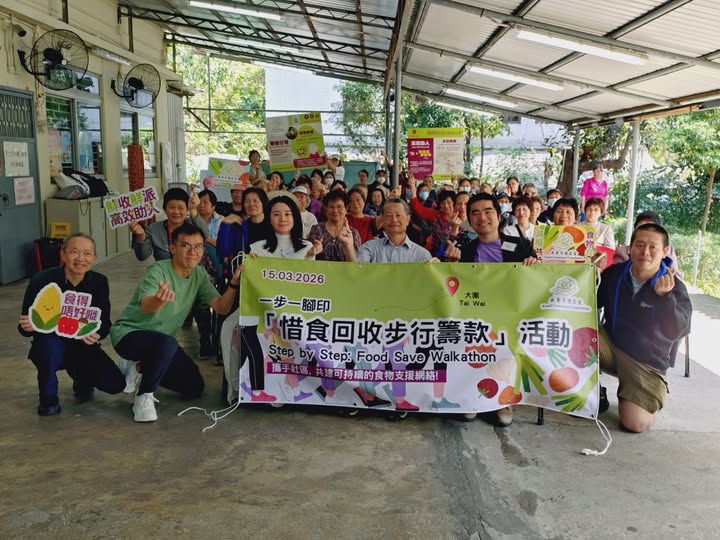
(Hong Kong, March 15, 2026) The Food Commons Foundation held a "Step by Step:Food Save Walkathong" event in Tai Wai today. Through tea gatherings, food distribution experiences, and guided community walks, the event aimed to help citizens understand the current situation of food waste and grassroots food assistance in Hong Kong, and to facilitate face-to-face interactions with elderly beneficiaries and their families.
Mr. Leung Kam-tim, Chairman of the Food commons Foundation, Mr. Leung Ka-wai, Sha Tin District Councillor and officiating guest, and Ms. Law Yuen-pui, Chairperson of the Sha Tin Women's Association and Sha Tin District Councillor, a local partner, delivered speeches, emphasizing the importance of community food rescue efforts in the context of poverty and an aging population in Hong Kong. After a group photo, everyone shared snacks prepared by elderly beneficiaries and volunteers using recycled ingredients. Guests, participants, and beneficiaries exchanged ideas, sharing how food assistance has changed their health, finances, and quality of life, allowing participants to experience the humanity and dignity behind "food rescue." They then participated in distributing donated food to residents in need, personally experiencing the spirit of cherishing food and helping others.
This food recycling walk started from San Tin Tsuen in Tai Wai, passing through Che Kung Temple, Tai Wai Market, and Wai Fong Shopping Centre. Along the way, experienced recyclers and volunteers explained the "collect and distribute within the district" food recycling model, sharing their daily experiences of "saving food" in markets and shops, including collection, sorting, and same-day distribution. This transformed potentially discarded food into community support, including fruit donations from Che Kung Temple and vegetable donations from Tai Wai Market vendors. Participants also experienced collecting and sharing ingredients on-site. Finally, volunteers shared their bread-collecting and sharing process at The Wai and their experiences interacting with beneficiaries. Dr. Connie Hui , advisor to the Food Commons Foundation, participated in the community walk, supporting the food recycling initiative and sharing her experiences.
Mr. Leung Kam-tim, Chairman of the Food Commons Foundation, pointed out that through these hands-on community experiences, citizens can gain a more concrete understanding of the actual operation of market recycling and help establish the concepts that "leftover food can be reused" and "food recycling can start from the community," enabling the public to make more conscious consumption and dietary choices in their daily lives.
In fact, a survey of beneficiaries of the "Sha Tin District Food Recycling and Sharing Scheme" previously completed by the fund showed that if the service were interrupted due to funding issues, nearly 70% (68.9%) of respondents said their financial burden would increase significantly, reflecting that the scheme has become an important safety net for the community. This survey interviewed 103 beneficiaries, primarily elderly and low-income families.
Economically, over half of the families can save more than HK$500 per month on food expenses, with some saving over HK$1,000. The freed-up funds can be used for medical care, children's education, and daily necessities, significantly alleviating financial pressure. In terms of health, over 90% of respondents said the scheme increased their intake of fresh fruits and vegetables, helping them maintain basic nutrition amidst high prices.
"One Dollar, Multiple Benefits": Balancing Environmental Protection, Poverty Alleviation, and Community Connection. Since 2009, the Food Common Foundation and its predecessor projects have been collecting edible leftovers in the community on a "collect and distribute within the district" basis, accumulating over 11,373 metric tons of food collected and benefiting over 10.07 million people. Under the current operation, every 1 dollar donated can be converted into approximately 6.5 dollars worth of fresh, nutritious food, while reducing the environmental burden caused by food waste. It is a "one dollar, multiple benefits" model that combines environmental, social, and economic benefits.
The foundation hopes this event will allow more citizens to personally understand local food waste and poverty issues, and how community food recycling can turn waste into support, thereby practicing food conservation in their daily consumption and eating habits, and supporting the continuation of frontline food rescue services.
The foundation also urges policymakers and all sectors of society to recognize the value of such frontline food recycling services from the perspective of "targeted poverty alleviation," given the increasing pressure on public finances and the continuous expansion of food waste processing facilities, and to continue and strengthen support for grassroots food assistance to prevent gaps in the community safety net.